RESEARCH OPPORTUNITIES
Master and PhD funded projects at UQAM
We are also looking for graduate students in atmospheric sciences or related fields who are interested in doing a Master or a PhD in climate sciences. Please, have a look at the graduate programs offered at the Université du Québec à Montréal (UQAM) or contact me directly for more information.
CURRENT PROJECTS
Precipitation extremes in midlatitude cyclones
East coast cyclones that affect the east coast of Australia can have hugely destructive potential causing major flooding and damage to southern Queensland, the New South Wales coast, Sydney and Tasmania. To understand how devastating storms form and evolve and how a changing climate might affect them we need to use high-resolution numerical models that represent physical processes in the atmosphere and simulate the development and evolution of variables such as rainfall, air pressure and wind that come together to create the storms we experience.
Decomposing temperature extremes and their changes
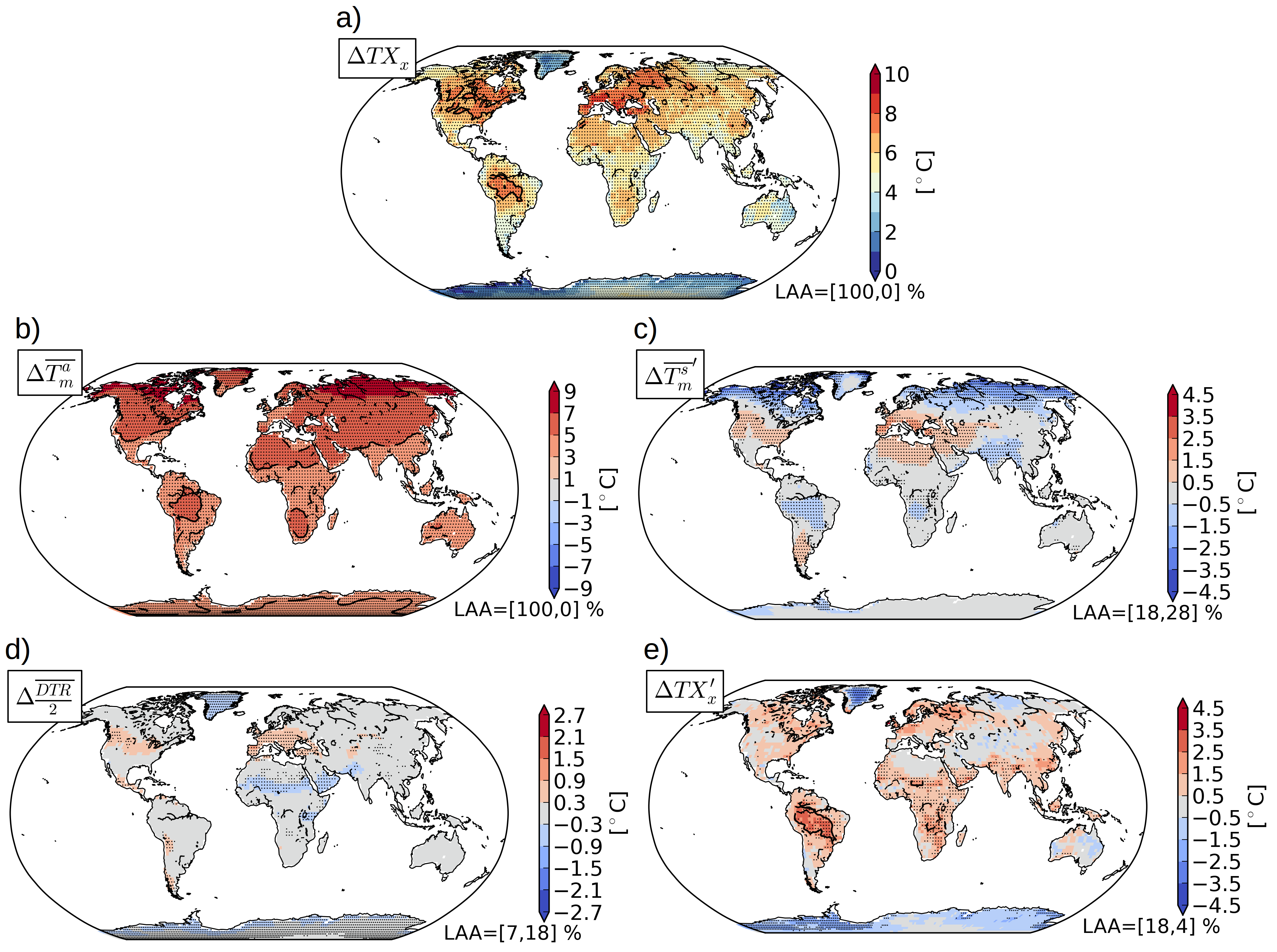
Temperature extremes are complex phenomena that result from the superposition of different physical processes operating and interacting with each other at various temporal scales including subdaily, daily, seasonal and decadal time scales.
Future changes in temperature extremes (a) can be then decomposed according various terms as shown in the figure below: an annual mean (b), a seasonal mean anomaly (c), a mean diurnal temperature range (d) and a daily extreme anomaly (e).
More details in Di Luca et al., 2020a,b in publications.
Climate models' evaluation
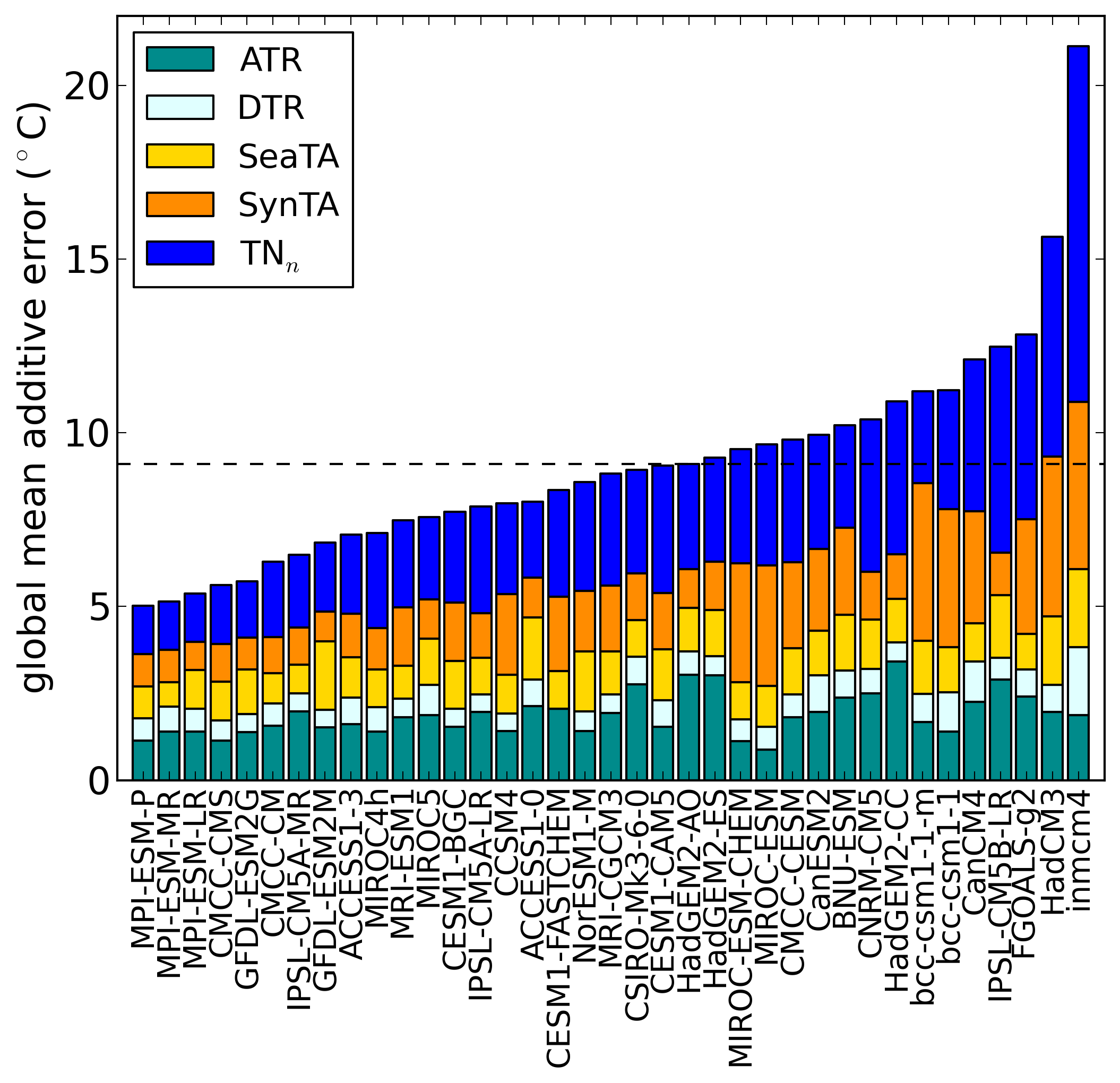
Climate models are complex mathematical programs that represent physical processes using a combination of laws of physics and empirical relationships. A common issue when evaluating climate models is whether a model produces the right results, but for the wrong reasons, due to compensation of errors of different sign [e.g., Palmer, 2016]. For example, a climate model might produce the right mean daily temperature, but with far too high a night-time minima and far too low a day-time maxima. As the climate phenomena being assessed increases in complexity and includes more and more processes, the chances for error compensation increase.
We try to understand